The ruling in plain English
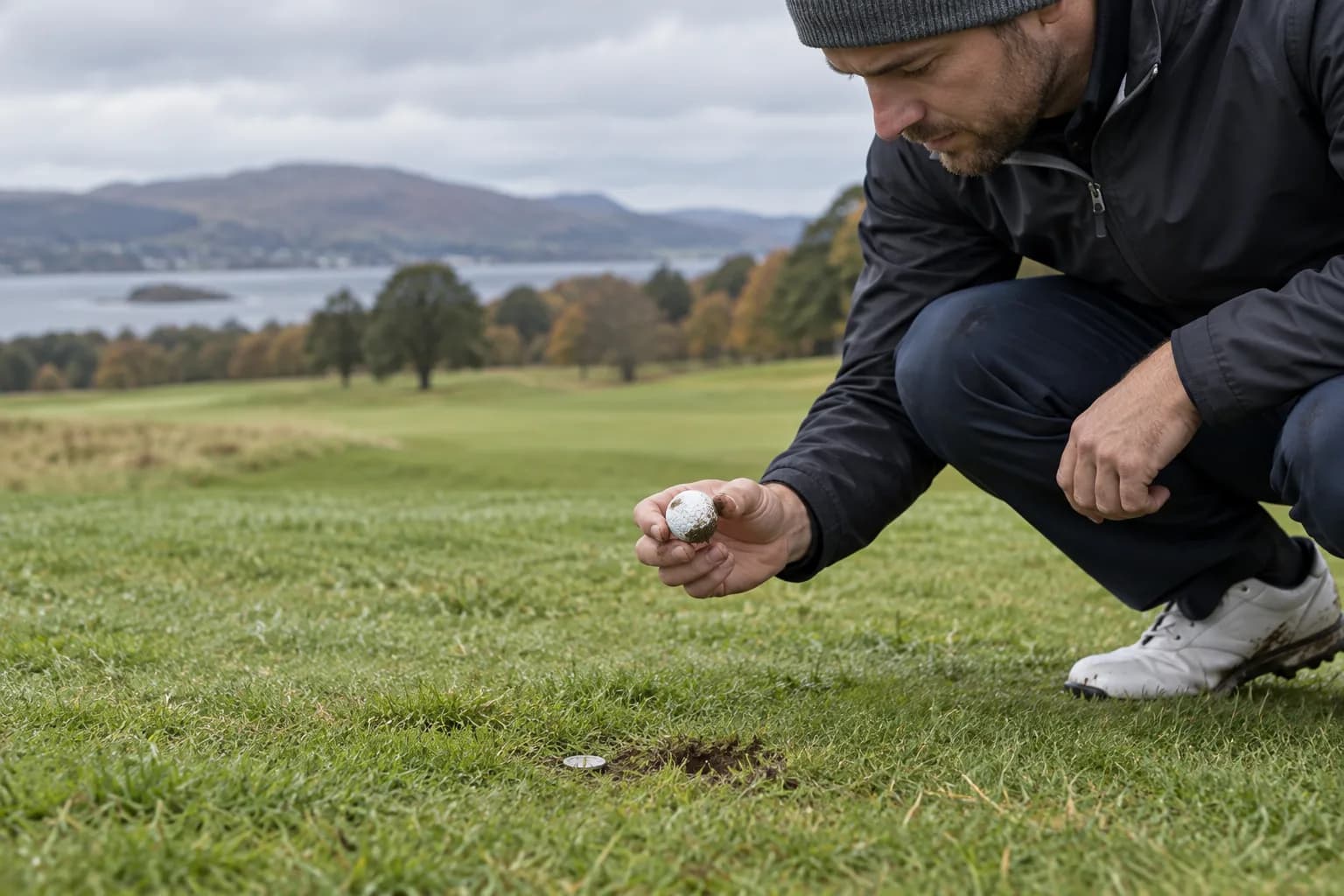
Sometimes. A ball lifted from the putting green may always be cleaned. Elsewhere, why you lifted it matters: for identification, clean only enough to recognise it; when checking a cut or crack or lifting because it interferes, do not clean it. Checking whether relief is available also restricts cleaning unless you then take relief.
Apply the Rule on the course
Check that you may lift, then decide how much cleaning that reason allows before you replace or drop.
- 1
Confirm that a Rule allows you to lift the ball and whether its original spot must be marked.
- 2
Identify the exact reason for lifting before wiping it.
- 3
If the lift is to identify the ball, clean only the portion needed; if it is to check damage, interference or a relief condition, follow the restriction.
- 4
Replace the ball or take the applicable relief under the Rule you used.
Keep a golf towel within reach
When the Rules allow you to clean your ball, an absorbent towel makes the job quick and keeps dirt off your hands and equipment. This Titleist tri-fold towel uses terry material and includes an attachment hook.
As an Amazon Associate, we earn from qualifying purchases. View the Titleist towel on Amazon
What else matters
Cleaning when Rule 14.1c does not allow it costs one penalty stroke; replace the lifted ball when required.
Exceptions
- Cleaning a ball lifted to identify it is permitted only to the extent needed.
- If a ball is lifted to check a relief condition, cleaning becomes allowed if relief is actually taken under a Rule.
- A ball lifted from the putting green may always be cleaned.
Common mistakes
- Assuming that any permitted lift also permits a full clean.
- Wiping mud from a ball lifted solely to check whether it is cut or cracked.
- Cleaning a ball lifted for identification beyond what is needed.
Remember: First ask why it was lifted; then decide whether it may be wiped.
R&A Rule 14.1c
Independent plain-English guide. The current Rules, Interpretations and applicable Local Rules control.